
Could you get through a single day without your smartphone? Most of us wake up, switch off the alarm, scroll the news, check messages, and open Instagram or YouTube the moment we have a spare second. It feels like second nature now.
But Christopher Nolan — the director behind Inception, Interstellar, Dunkirk, Oppenheimer, and the upcoming The Odyssey — is a little different. For all the cutting-edge technology in his films, the man himself is famous for not using a smartphone at all.
Does Christopher Nolan Really Have No Smartphone?
Yes — sort of. More precisely, instead of a smartphone, Nolan carries a basic flip phone that he uses only when he needs to. In a 2023 NPR Fresh Air interview, he said he doesn’t walk around with a smartphone in his pocket. It isn’t that he dislikes technology; it’s that he wants to avoid the constant distraction a smartphone creates.
Here’s the fun part: he barely uses email either. In a 2020 interview, Nolan explained that rather than email, he prefers picking up the phone and calling people directly. For a world-famous director, that workflow is genuinely surprising.
“If I Had One, I’d Be Severely Addicted”
The detail that stuck with me most: Nolan has said the reason he avoids smartphones is that he knows he’s the type of person who would get hooked. If he owned one, he figures he’d be staring at it constantly, just like everyone else. So he never started — and now describes life without a smartphone as a kind of superpower.
That stung a little. Most of us tell ourselves, “I’m not addicted to my phone.” But then we pull it out standing in the grocery checkout line, during the five minutes we’re early for a meeting, and for the last ten minutes before we sleep.
The Time He Guards: Doing Nothing
The biggest reason Nolan skips the smartphone turns out to be simple. He protects his thinking time. Those little gaps we usually fill with a screen — arriving early, waiting on someone, staring out the window on a train — matter to him. That’s when he lets ideas for his next film develop.
He’s explained across several interviews that many of his best thoughts come from exactly the “in-between” moments people rush to fill with online activity. It makes you wonder how much of Inception or Interstellar was born in those quiet gaps.
He Bans Phones on Set, Too
Nolan’s rule isn’t just for himself. His film sets are known for limiting phone use. In past interviews he’s said that when people check phones mid-shoot, their minds leave the world of the movie they’re building and wander somewhere else. So if you need your phone, you step off the set. Cast members from Oppenheimer have described the phone-free, deep-focus atmosphere of his sets.
Imagine a modern set with not a single smartphone in sight — strange, right? But for Nolan it’s less a rule than an environment built for focusing on the work in front of him.
But Nolan Isn’t Anti-Tech
Here’s the twist. Because he skips smartphones and email, Nolan might sound like an analog purist. But his movies lean hard into the latest technology. He shoots on IMAX cameras and large-format film, and uses computers in the edit. His test for any tool is plain: “Does this technology help me do the job I want to do better?”
In the NPR interview he framed it as choosing the right tool for the work, not rejecting tech outright. So he’ll use the newest gear for his films — and skip the smartphone that, in his judgment, steals his focus.
Why Nolan Hands Scripts Out in Person
His unusual contact style shows up in production, too. Because he avoids smartphones and email, important messages sometimes flow through the people around him. Online, the stories about how he casts actors or hands over scripts become their own kind of legend.
Especially for security, he’s known to deliver scripts in person or show them in limited ways rather than emailing them — something Oppenheimer cast members have talked about. The man builds films that are the pinnacle of technology, yet works in a strikingly analog way.
Could You Live Without a Smartphone?
Honestly, none of us can live exactly like Nolan. Without my phone, even I would be stuck — banking, maps, messaging, photos, all of it. So the point isn’t “you must throw your phone away.”
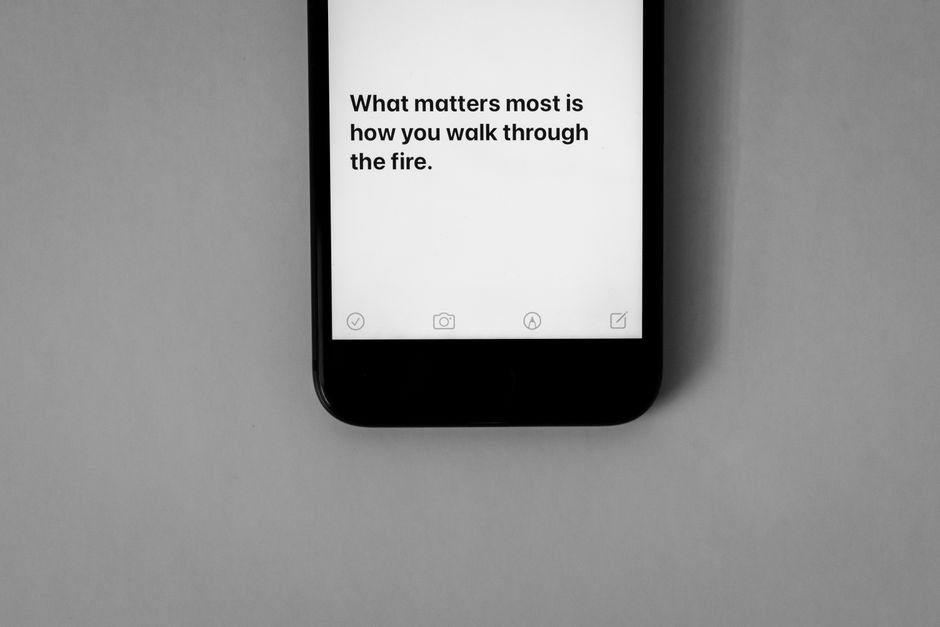
What Nolan’s story nudges us to ask is different: is your smartphone a tool that helps you with your time, or one that quietly takes your time for free? In a life where we can’t endure even a moment of waiting without reaching for the phone, maybe what we’ve lost isn’t boredom — it’s the time to simply think.
A director who builds wildly complex worlds like Inception, Interstellar, and Oppenheimer values a few minutes of looking out the window more than a smartphone. That, to me, was the most striking part. We may not be able to ditch our phones the way Nolan has — but could you try, just for today, not reaching for it first while waiting for the elevator, the coffee, or a quiet moment alone? You might find, in those few minutes, a thought that hadn’t surfaced before.
Bookmark this piece and share it with someone who’s trying to reclaim their focus — and come back anytime you need the reminder.