
Why Your Glasses Never Stay Clean (And the 30-Second Fix an Optician Swears By)
Water spots, fogged lenses, mystery smudges—daily-wear glasses turn into a blurry mess faster than you can say “microfiber cloth.” Most people reach for their shirt hem or a dry tissue, scratch the coating, then wonder why their $200 lenses look sandblasted after six months.
An optician with 20 years of bench experience shared the routine she gives every customer: four steps, thirty seconds, zero specialty products. Below is the exact method, why each step matters, and the three silent habits that quietly ruin expensive frames.
The 4-Step “Optician Method” for Streak-Free Lenses
Step 1: Rinse With Cold Running Water First
Before any cloth touches glass, hold the frames under lukewarm-to-cold tap water for 5–10 seconds. Dust and microscopic grit act like sandpaper when you wipe dry; the rinse flushes them away.
Critical rule: Never use hot water. Heat expands lens coatings and plastic frames at different rates, creating micro-cracks that scatter light and attract oil.
Step 2: Make a 9:1 Water-to-Dish-Soap Solution
Mix nine parts water with one part mild liquid dish soap (Dawn, Joy, or any degreaser without lotion/antibacterial additives) in a small cup or spray bottle. A single drop of concentrate per tablespoon of water is plenty.
Straight soap strips anti-reflective and hydrophobic coatings; the dilution keeps cleaning power while protecting the thin-film layers.
Step 3: Swirl, Don’t Soak
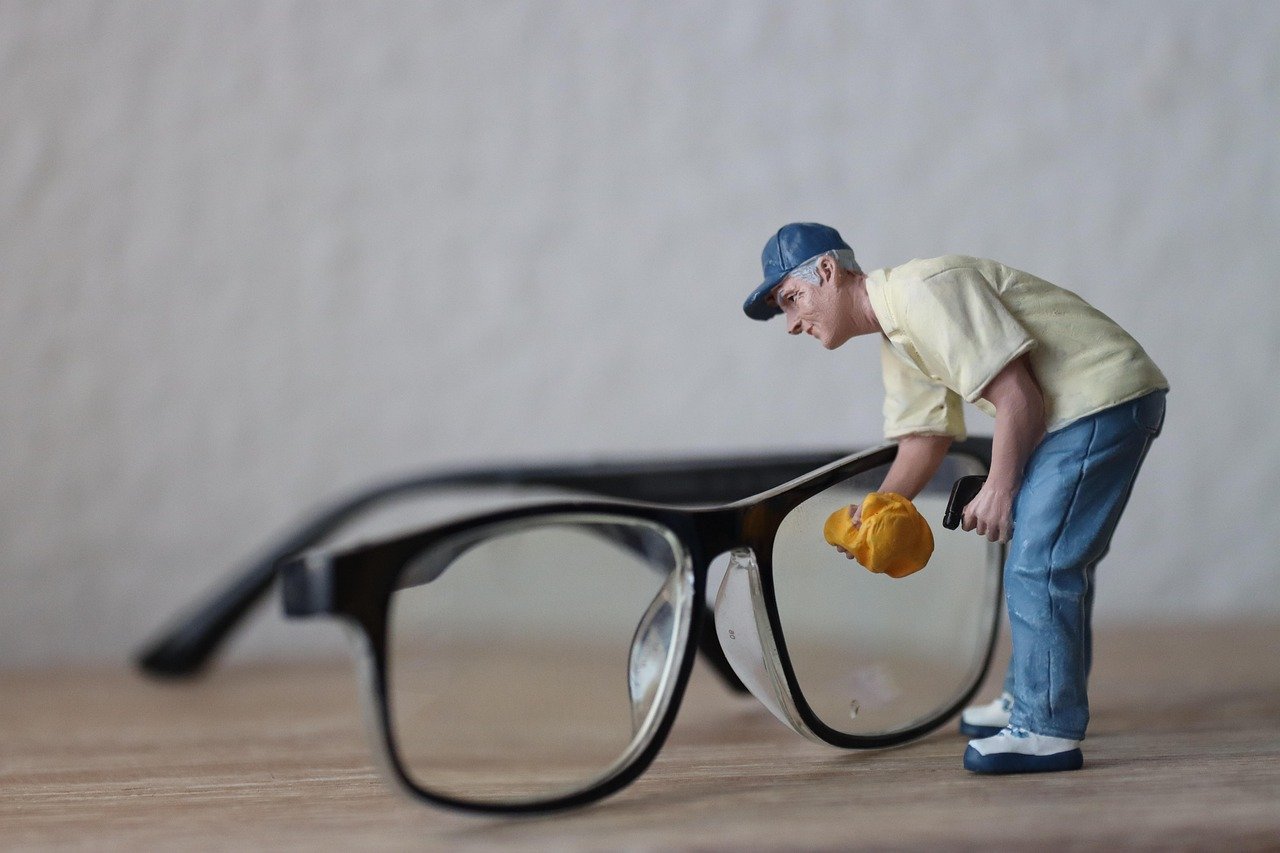
Submerge the entire frame and gently swirl 4–5 times—about three seconds total. Extended soaking lets diluted surfactant seep under coating edges and delaminate them.
Rinse thoroughly under running water until zero suds remain. Residual soap dries into a hazy film that mimics scratches.
Step 4: Wipe Inside-to-Outside With a Clean Microfiber
Pat (don’t drag) the lenses with a fresh microfiber cloth. Stroke from the nasal edge toward the temple in one direction. Side-to-side wiping traps remaining particles and rolls them across the surface like a tiny rock tumbler.
Hit the nose pads and the frame-lens junction with a fingertip or unused soft toothbrush; skin oils and makeup accumulate there first.
| Do | Don’t |
|---|---|
| Cold/lukewarm water rinse first | Hot water, saliva, breath fog |
| 9:1 water:dish-soap dilution | Straight soap, Windex, alcohol wipes, vinegar |
| 4–5 second gentle swirl | Minute-long soak, ultrasonic cleaner (unless optician-approved) |
| Inside-to-outside pat dry | Circular buffing, paper towels, clothing, tissues |
Bonus: The 15-Second Anti-Fog Hack
Winter masks, steamy kitchens, stepping indoors from cold—fog happens. A dab of petroleum jelly (Vaseline) or plain lip balm on the outer lens surface creates a hydrophobic film that prevents condensation nucleation.
- Apply a rice-grain amount to each outer lens.
- Buff with a clean microfiber until invisible.
- Re-buff with a second clean cloth to remove any haze.
Warning: Over-application blurs vision. Less is more; re-apply weekly or after each deep clean.

Three Silent Killers of Expensive Eyewear
1. Heat Torture
Dashboards in July, sauna benches, hair-dryer blasts—anything above 60 °C (140 °F) softens acetate frames and delaminates AR coatings. Store glasses in a hard case, never on a car console.
2. Chemical Splash
Hairspray, perfume, setting spray, sunscreen mist—volatile organic solvents attack coating binders. Remove glasses before spraying; if exposure happens, rinse immediately with cold water.
3. DIY Frame Bending
“It pinches my nose” tempts a quick squeeze. One wrong torque shifts the optical center, inducing prism error that causes eye strain, headaches, and progressive myopia progression in teens. Adjustments belong to an optician with a frame heater and alignment jig.
Quick-Reference Maintenance Schedule
| Frequency | Action |
|---|---|
| Daily | Cold-water rinse + microfiber pat (Steps 1 & 4) |
| Weekly | Full 4-step clean + anti-fog touch-up |
| Monthly | Inspect nose pads, screws, temple tips; ultrasonic bath (optician) |
| Annually | Professional alignment, coating check, replacement nose pads |
FAQ
- Can I use isopropyl alcohol wipes?
- Only if the label explicitly says “safe for anti-reflective coatings.” Most drugstore alcohol pads strip hydrophobic layers within weeks.
- What about pre-moistened lens wipes?
- Convenient for travel, but many contain alcohol or ammonia. Check ingredients; stick to water-based formulas.
- My lenses have a “scratch” that won’t clean off. Is it toast?
- True scratches catch a fingernail. If your nail glides over it, it’s likely coating delamination—an optician can sometimes re-coat for less than new lenses.
- How often should I replace microfiber cloths?
- Wash weekly (no fabric softener, air dry). Replace when they feel rough or leave lint—usually every 3–6 months.
Bottom Line
Thirty seconds of cold water, diluted dish soap, and a directional pat dry keeps lenses clearer than any $20 spray. Pair it with the anti-fog trick and the three “don’ts,” and your current frames will outlast the prescription inside them.
Found this useful? Bookmark it for your next deep-clean session, share it with the friend who still uses their T-shirt, and stay tuned—next week we’ll cover the one ultrasonic-cleaner mistake that voids lens warranties.