
You fished your water-damaged phone out of the sink, the toilet, or the pool. Your first instinct is probably to power it on and see if it still works — or to bury it in a bag of rice and hope for the best. Both moves can cost you the phone, and everything on it.
A wet phone isn’t dead the moment it gets wet. What you do in the next ten minutes is what decides whether it lives.
- Power it off — don’t press anything.
- Don’t plug in the charger.
- Blot the outside with a soft cloth — no heat.
- Get it to a repair or data-recovery pro fast.
Why a Wet Phone Is a Countdown, Not a Verdict
When liquid reaches the logic board, it doesn’t only short the phone at the instant of contact. As the water sits inside, it starts to corrode the tiny traces and chips. That slow corrosion is what kills water-damaged phones “for no reason” a few days later. The clock starts the second the phone gets wet — and every minute you spend trying to dry it yourself is a minute corrosion is working against you.
The 4 Things You Should Never Do to a Wet Phone
1. Don’t power it on or plug it in
This is the most common mistake right after a dunk. Even if the screen is black or the touch doesn’t respond, resist the urge to press the button or reach for the charger. Current flowing through a board that still has moisture can fry the mainboard on the spot — and take your data with it. Leave it off.
2. Don’t blow-dry or fan it dry
It looks dry on the outside, but the inside is a different story. Heat from a hairdryer can warp or crack the chips, and the airflow can push moisture deeper into the board instead of out. A phone that “comes back to life” after a blow-dry can suddenly die a few days later when corrosion takes hold. Skip the heat entirely.
3. Don’t trust the rice trick
The old “rice absorbs moisture” hack is everywhere, but it doesn’t remove water that’s already inside the board. Worse, the residue and lingering humidity leave an invisible film on the components that quietly corrodes them over time. Rice buys you nothing — and it buys corrosion time. Get the phone to a recovery specialist instead.
4. Don’t assume “it turns on, so it’s fine”
A screen that lights up and a touch that responds feel reassuring, but a water-damaged phone is dangerous precisely because it can seem normal at first. Corrosion keeps spreading. Owners regularly report a phone that worked fine for days, then shut off for good or quietly lost every photo and chat. If the data matters — business contacts, family pictures, message history — get it checked immediately.
The Right Way to Save a Water-Damaged Phone
- Power it off right away (if it’s still on).
- Don’t plug in the charger.
- Blot the outside with a soft tissue or cloth — no heat, no rubbing.
- Take it to a professional recovery or repair shop fast.
Data recovery is a race against time. What matters isn’t how long it sat in the water or how long you spent drying it — it’s how quickly you handed it to someone who can stop the corrosion.
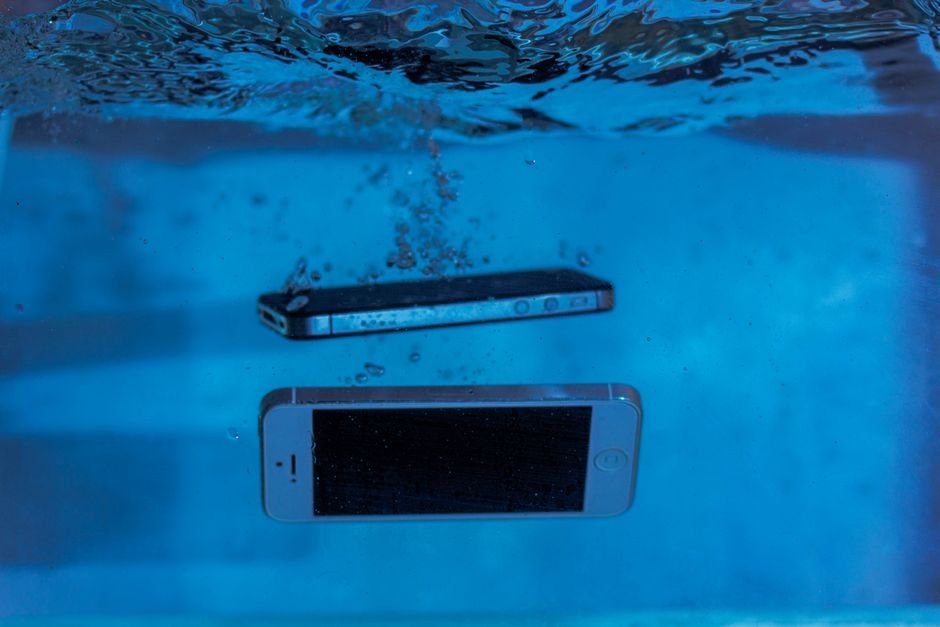
Most Phones That Arrive “Untouched” Are Recoverable
The recoveries that actually succeed are almost always the ones where the owner powered nothing on and brought the phone straight in. Summer brings a wave of these cases — dropped at the beach, knocked into the tub, run through the washing machine — and the pattern is consistent: the less you poke at a wet phone, the better its odds.
Bottom Line
If your phone takes a swim, don’t panic and don’t poke at it. Power off, don’t charge, and call a specialist before corrosion sets in. One choice — handing it over fast instead of “fixing” it yourself — can save your data, or wipe it for good.
FAQ: Water-Damaged Phones
Does putting a phone in rice actually work?
No. Rice doesn’t pull water out of the board, and the lingering humidity can leave a film that corrodes components over time. A phone that “looks fine” after rice can still fail days later.
Can a water-damaged phone be fixed?
Often, yes — if you don’t power it on and get it to a professional quickly. The water-damaged phones with the best recovery odds are the ones owners left off and brought in untouched.
If this helped, bookmark it for the next “oh no” moment — and share it with the friend who’d reach for the rice first.